Antiquing Consignment Fees

I think it is a safe bet that most of us here are collecting a consignment fee on goods sold. I mean… isn’t that why Quail is your preferred point of sale? Our ability to track vendor sales and consignment fees? …Perfect!
New store owners will often ask us questions about the antiquing industry, and how other stores make a profit. We know of a couple of different ways that stores make money, all of which (obviously) are supported in Quail: consignment fees, rent, and (barely, but it counts) credit card fees. Today we’re just going to talk about the first one: consignment fees. What do stores generally charge for a consignment fee when using Quail?
In case you’re not familiar with the pricing models in antique malls, here is a quick breakdown. Generally antique stores and vendor malls charge rent for a physical space. This rent is pretty much like your normal household rent: it covers the cost of the building and any other fixed costs (heating, advertising, whatever) that the store owner needs to cover. On top of that many stores have consignment rates to offset fixed rent, provide another source of income for the store, and help “align the incentives” for stores and vendors. Some stores choose to only collect rent (0% consignment), some are consignment-only and don’t charge rent (these, obviously, tend to have higher consignment rates!), and some charge both rent & consignment. These generally reduce the rent to cover essential costs, but also collect consignment fees to incentivize the store.
Okay, that wasn’t such a quick breakdown…
Back to consignment rates! We took a look at the spread of consignment rates across all of Quail (per booth) and found that the average consignment rate of a booth is between 10-15% and that the vast majority of booths fall below the 15% rate:

We also took a look at the top three grossing stores of each of the subscription tiers; under 30 vendors, 30-59 vendors and 60+ vendors. The average consignment rate, for all tiers of the top three grossing stores in Quail was always… you guessed it… 10-15%.
Of course, that’s just a glimpse of how those stores make money. We assume that 10-15% of the total goods sold in that store is probably not covering the rent or mortgage on the commercial space, so all of these stores are charging a flat rent on top of consignment. We’ll have to do some more digging to find out more detail, but if you just want to compare your consignment rate to other antique stores and vendor malls: under 20% seems to be a pretty standard choice.
So. Now that you know what everyone else is charging, you might want to change your consignment fees. Here’s how you’d do that in Quail:
Creating a new booth
When adding a new booth for a vendor, simply enter the desired consignment rate for that booth. Simple right?

Changing consignment rate for current booth
To change the consignment rate for a vendor due to a change in the consignment rate (and not correcting a mistake) you will need to follow the steps below.
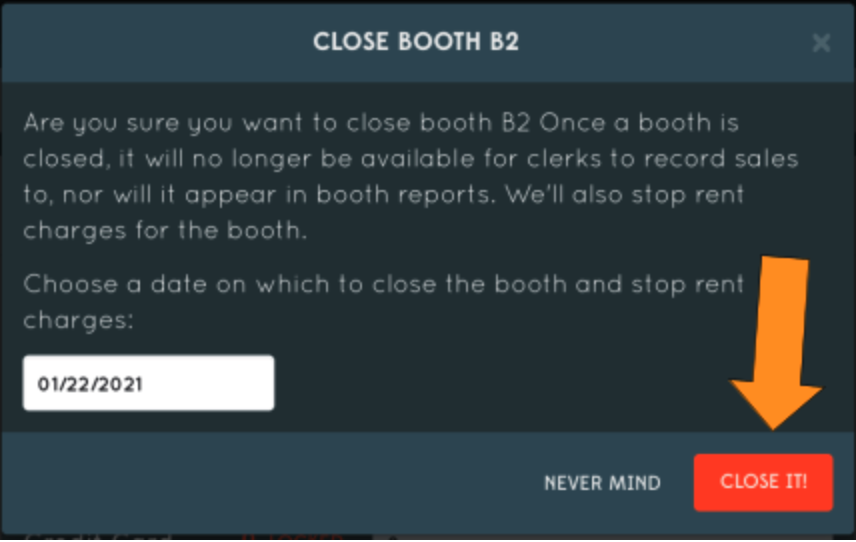
Step 1: Close the current booth
First thing we need to do is close the current booth. If you attempted to change the consignment rate, it would change all of the historical records for that booth (unless you are correcting a mistake, you DO NOT want to do this). Don’t worry, the sales data is safe and will still be tied to the vendor.

Yes, close it!
Step 2: Create a new booth
Next, let’s create a new booth, with the new consignment rate. Start by clicking new booth, for the particular vendor.

When creating the new vendor, simply enter the new rates that you want to start charging.

Once you create the booth, you will be able to process sales against that booth.
To note: Quail will break these booths up into two reports when printing sales for this vendor. If changing the consignment rate mid-month, be sure to add the two reports when paying the vendor for their sales.
Next time we will look at credit card data. Are the majority of stores charging a credit card fee? If so, what is the average percentage?
Until next time, happy selling!
— Chris